
Loading…
Loading…
 Photo: Photo by <b><span class="plainlinks"><a class="external text" href="https://commons.wikimedia.org/wiki/User:A.Savin">A.Savin</a></span></b> via Wikimedia Commons (FAL)
Over 1,000 monks once lived and studied among these 109 caves, cut into basalt on the trade routes between the Deccan and the coast.
A network of Buddhist rock-cut caves carved into a basalt outcrop within Sanjay Gandhi National Park between roughly the 1st century BCE and 10th century CE. With 109 caves, it was once a major Buddhist learning centre and monastery complex on ancient trade routes linking the Deccan to the coast. The caves feature viharas (monastic cells), chaityas (prayer halls) and carved water cisterns fed by natural rainwater channels. It is closed on Mondays and remains one of the largest single excavations of its kind in India.
| Monday | Closed |
| Tue-Sun | 7:30 AM - 5 PM |
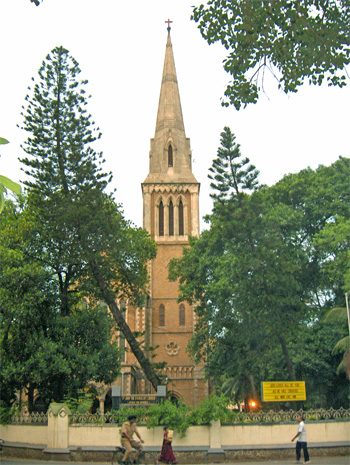
Built to remember soldiers killed in the First Anglo-Afghan War of 1838 to 1842, it carries their regiments in stained glass and marble.

It began in 1922 as a museum named for a visiting prince, and grew into a home for over 50,000 artefacts, from Indus Valley antiquities to Mughal miniatures.

Portuguese colonists found a stone elephant on the shore and named the island for it. Inside, a towering Shiva carved centuries earlier still watches.