
Loading…
Loading…
 Photo: Photo by <b><span class="plainlinks"><a class="external text" href="https://commons.wikimedia.org/wiki/User:A.Savin">A.Savin</a></span></b> via Wikimedia Commons (FAL)
Portuguese colonists found a stone elephant on the shore and named the island for it. Inside, a towering Shiva carved centuries earlier still watches.
Rock-cut cave temples on Elephanta Island in Mumbai Harbour, carved between roughly the 5th and 8th centuries CE and dedicated to Shiva. The main cave's centrepiece is the towering Sadashiva (Trimurti) sculpture, considered one of the finest examples of Indian rock-cut art. Portuguese colonists who found stone elephants at the landing site gave the island its European name. Inscribed as a UNESCO World Heritage Site in 1987, the caves are reached by a roughly hour-long ferry from the Gateway of India.
| Monday | Closed |
| Tue-Sun | 9 AM - 5:30 PM |
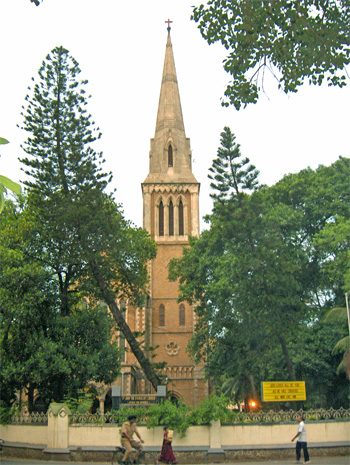
Built to remember soldiers killed in the First Anglo-Afghan War of 1838 to 1842, it carries their regiments in stained glass and marble.

It began in 1922 as a museum named for a visiting prince, and grew into a home for over 50,000 artefacts, from Indus Valley antiquities to Mughal miniatures.

The causeway to this shrine vanishes underwater at high tide, so pilgrims plan their visit around the sea.