
Loading…
Loading…
 Photo: Photo by DesiBoy101 via Wikimedia Commons (CC BY 4.0)
Its name means rest. Bajirao II built it as a leisure home, with a wooden facade carved in intricate detail.
A Peshwa-era mansion built in 1811 by Bajirao II, one of the last Peshwa rulers of the Maratha Empire, notable for its intricately carved wooden facade and balconies in traditional Maharashtrian style. The building later served various administrative and educational purposes under British rule after the fall of Peshwa power in 1818. Much of its ornamental woodwork survives, offering a glimpse of pre-colonial Maratha domestic architecture. It remains one of the few well-preserved Peshwa-era wadas open to the public in Pune.
| Monday | Closed |
| Tue-Sun | 10 AM - 7 PM |
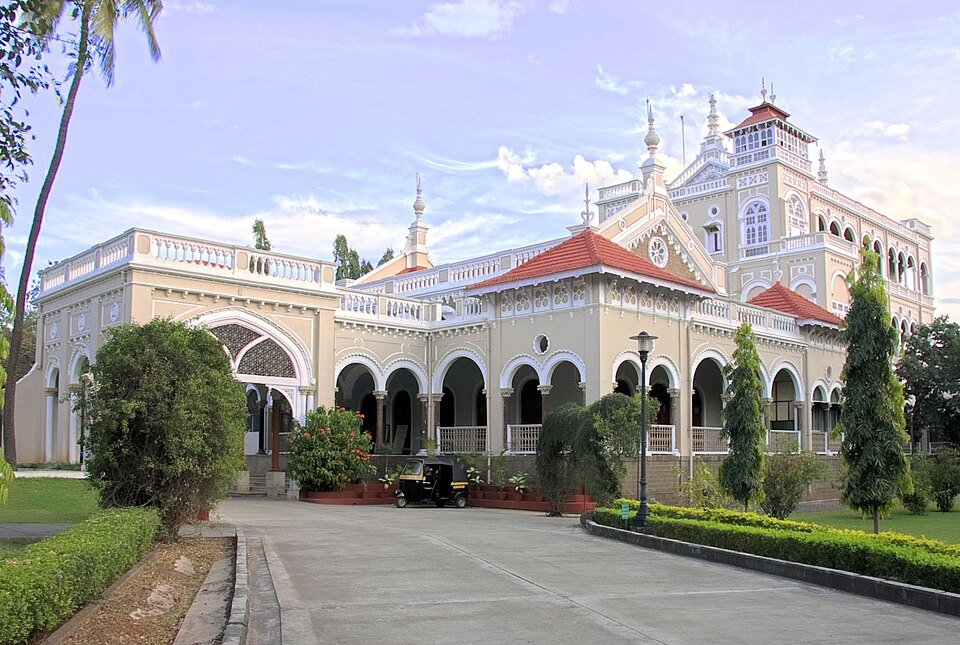
Built in 1892 as an act of charity during a famine, it later became a prison. Gandhi was held here during Quit India, and Kasturba Gandhi and Mahadev Desai died in custody. Their memorials stand in the garden.

Believed to be where the young Shivaji spent his childhood. What stands today is a 1980s reconstruction after fire destroyed the original.

Sambhaji, Shivaji's son, was born here, and here in 1665 Shivaji signed a treaty ceding forts to the Mughals.