
Loading…
Loading…
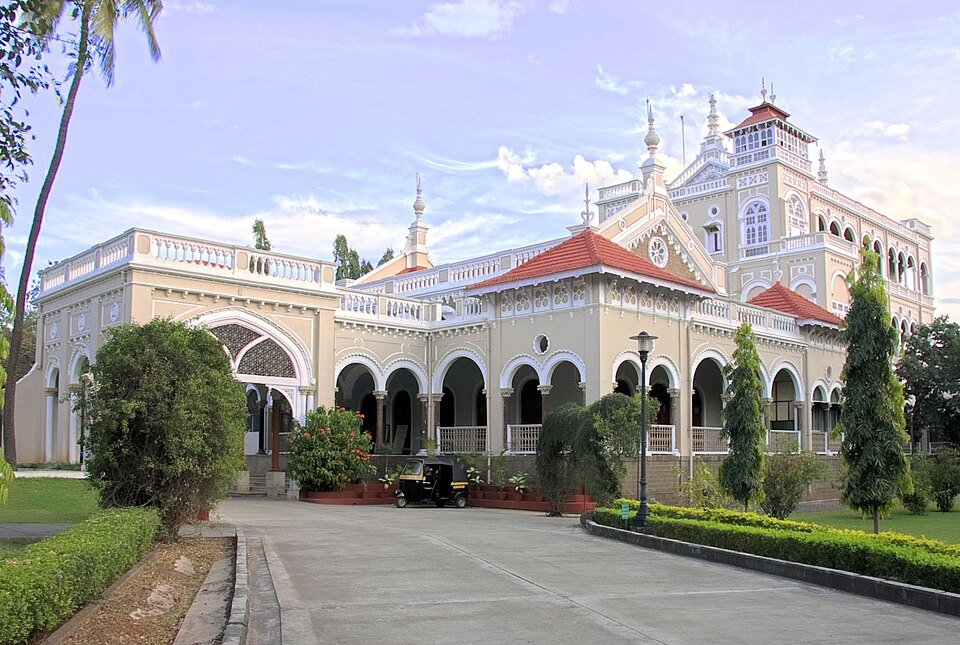 Photo: Photo by Khushroo Cooper via Wikimedia Commons (CC BY-SA 2.0)
Built in 1892 as an act of charity during a famine, it later became a prison. Gandhi was held here during Quit India, and Kasturba Gandhi and Mahadev Desai died in custody. Their memorials stand in the garden.
Built in 1892 by Sultan Muhammad Shah Aga Khan III in Indo-Saracenic style, reportedly as an act of charity to give work to people hit by a severe famine. During the Quit India movement it was used to detain Mahatma Gandhi, his wife Kasturba and secretary Mahadev Desai from 1942 to 1944. Both Kasturba Gandhi and Mahadev Desai died in custody here, and their memorials stand in the palace gardens. It was later donated to the nation by Aga Khan IV and now functions as a memorial and museum to Gandhi's life and the freedom struggle.
| Mon-Sun | 6 AM - 6 PM |

Believed to be where the young Shivaji spent his childhood. What stands today is a 1980s reconstruction after fire destroyed the original.

Sambhaji, Shivaji's son, was born here, and here in 1665 Shivaji signed a treaty ceding forts to the Mughals.

Where Shivaji first raised the flag of Swarajya, self-rule, and where he ruled from for over 25 years before moving to Raigad.